


Osteoporosis in Young Adults: A Wake-Up Call!

When people hear the word osteoporosis, they usually think of elderly women or men with fragile bones and hip fractures. But here’s a fact: Osteoporosis can affect young adults too!
It can be completely silent and sometimes with serious consequences. As an orthopaedic surgeon, I increasingly see patients in their 30s and early 40s with weak bones, stress fractures, or unexplained back pain.
This blog aims to help you understand why osteoporosis can occur in younger people, how to detect it early and what you can do to protect your bones for life.

What is osteoporosis?
Osteoporosis literally means ‘porous bone.’ It is a condition in which bone density and strength are low, making bones fragile and more likely to break. A minor fall, a sudden twist or even a jerk can cause fractures in severe cases.
Up to about 30 years of age, your body builds bone faster than it breaks it down. This is when you reach your peak bone mass. After that, bone loss gradually begins. If your peak bone mass is low to begin with, or if bone loss starts early, osteoporosis can develop much sooner than expected.
Why would a young person get osteoporosis?
Osteoporosis in older adults is mainly primary, i.e., due to age-related bone weakening, whereas osteoporosis in young adults is often secondary, i.e., caused by other medical conditions, lifestyle factors, or medications.
Common causes include:
1. Nutritional deficiency
Low calcium intake
Vitamin D deficiency (very common in India despite plenty of sunlight)
Bones need proper nutrition to stay strong. Crash dieting and restrictive eating habits also play a role.
2. Sedentary lifestyle
Bones need stimulation (exercise) to stay healthy. Prolonged sitting hours, lack of physical activity, and non weight-bearing exercise lead to weaker bones.
3. Hormonal problems
Low estrogen in women (irregular periods, Poly Cystic Ovarian Syndrome or PCOS, eating disorders)
Low testosterone in men
Thyroid or Parathyroid disorders
Hormonal balance is crucial for bone health.
4. Long-term medication use
Steroids (for asthma, skin or autoimmune diseases)
Anti-epileptic drugs
Some cancer treatments
High dose thyroid medication
These medicines can interfere with bone metabolism.
5. Chronic medical conditions
Celiac disease
Inflammatory bowel disease
Chronic Kidney Disease (CKD)
Rheumatoid arthritis
Liver cirrhosis
6. Addictions
Smoking affects bone formation, and excessive alcohol intake interferes with calcium absorption and may disturb hormone balance.
Symptoms: often silent until the damage is done!

Osteoporosis is known as a “silent disease” because bone loss happens without pain initially. Symptoms may include:
Persistent pain in the back, wrist, and shoulder
Frequent stress fractures (fractures occurring due to overuse)
Forward stooping posture (progressively increasing)
Fragility fractures (fractures after a trivial fall or without a major injury)
How is osteoporosis diagnosed?

The most reliable test is a bone density scan, such as DEXA (Dual Energy X-ray Absorptiometry) scan. It measures bone mineral density and compares it to the normal values in a young adult (T-score) and to the person of the same age (Z-score).
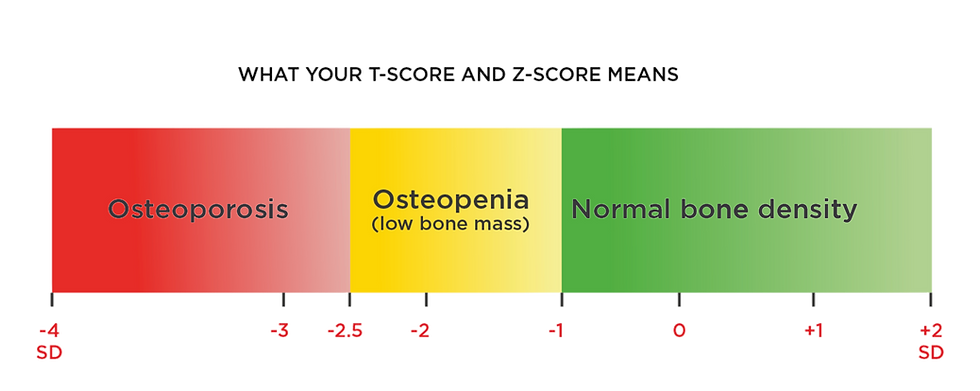
Other important tests to rule out underlying causes include:
Blood tests: Serum calcium, vitamin D, thyroid & parathyroid function
Hormone levels
Tests for underlying diseases (like celiac screening)
Why is osteoporosis at a young age alarming?
When osteoporosis occurs at a young age, it means:
You start adulthood with much weaker bones
You are at a higher risk of fractures for the rest of your life
Healing after fractures is slower
Long-term disability risk increases
A hip or spine fracture in a young adult can affect career, independence and even mental health.
Treatment: Not just medicines, but a strategy!
Treatment depends on the cause and severity.
1. Treating the underlying cause
Control thyroid disorders
Treat celiac disease
Adjust steroid dose if possible
Correct the hormonal imbalance
2. Nutrition for bone health
Daily needs:
Calcium: around 1000–1200 mg
Vitamin D: 800–1000 IU
Adequate protein intake (1.2-1.5 gm per Kg body weight)
Sources:
Milk, curd, paneer
Ragi, sesame seeds
Green leafy vegetables
Eggs and fish
Morning sun exposure daily for 15–20 minutes
3. Exercise: your natural bone medicine
Best exercises:
Brisk walking
Jogging
Weight training
Yoga (balance and posture)
Avoid:
Sudden twisting in severe osteoporosis
High-impact sports (in case of history of previous fractures)
4. Medications
In selected cases:
Calcium and vitamin D supplements
Osteoporosis medications such as teriparatide, denosumab, and bisphosphonates should be taken strictly as per the doctor’s advice after a DEXA scan evaluation.
Can osteoporosis be cured?
In young adults, bone loss can often be slowed or even partially reversed if caught early. That is why early diagnosis is so important. Unlike in elderly patients, younger bones can still recover when given the right support. Although a complete cure is not possible, it can be kept in check by taking care of the underlying causative factors.
Prevention: Strengthen the bones now to protect the future!
Simple habits make a huge difference:
✔ Eat calcium-rich foods
✔ Get enough sunlight
✔ Exercise at least 30 minutes daily
✔ Avoid smoking and excess alcohol
✔ Maintain normal body weight for your height
✔ Treat menstrual irregularities
✔ Don’t ignore repeated fractures
Peak bone mass is like a “bone bank.” The more you deposit early in life, the more you can withdraw safely later.
When should you see a doctor?
You should seek medical advice if:
You have had a fracture with a minimal injury
You have chronic back or generalised bone pain
You are on long-term steroid medications
You have irregular periods or hormonal problems
You have a strong family history of fractures or osteoporosis
Take home...
Osteoporosis is not just a disease of old age. In today’s world of fast food, long sitting hours, stress, and vitamin deficiencies, young adults are increasingly at risk. The good news is that young bones still have the power to heal and strengthen if we act early.
Take your bone health seriously, even when you feel healthy. Strong bones today mean an active, independent life tomorrow.
If you have unexplained fractures, persistent bone pain, or risk factors, do not ignore them. A simple test and timely treatment can protect your future mobility and quality of life.


Comments