


Got Heel Pain? Know All About ‘Plantar Fasciitis’

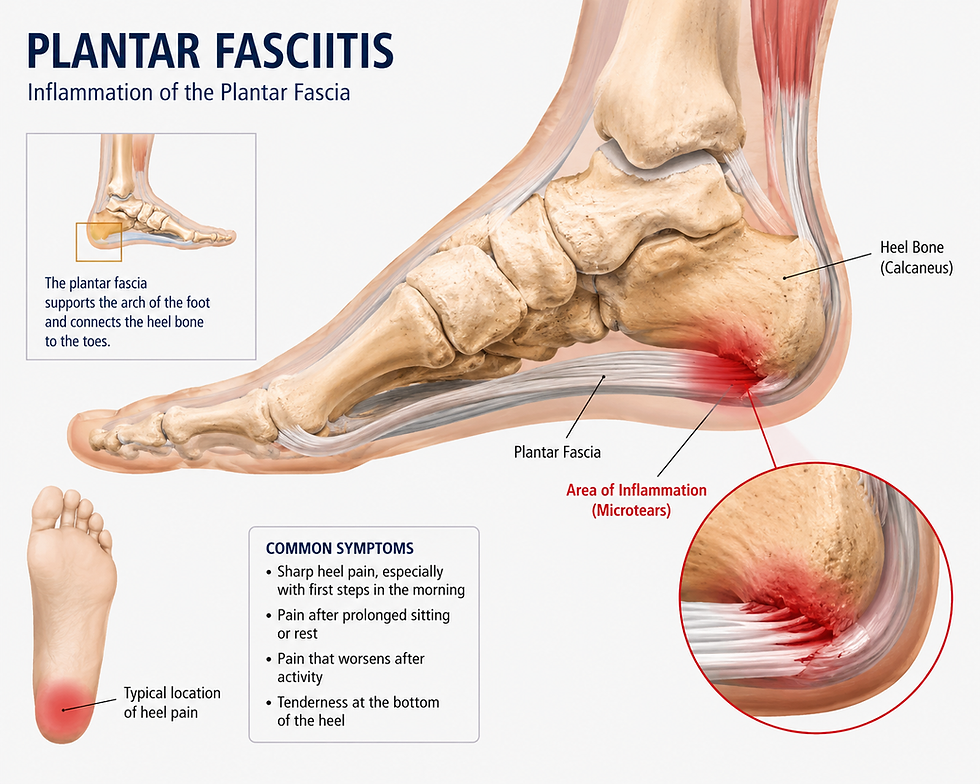
Heel pain is a one of the commonest complaints amongst general population and it can significantly affect your daily activities, exercise routine, and overall quality of life.
One of the most common causes of heel pain is plantar fasciitis, a condition that affects millions of people worldwide.
Whether you are an athlete, a sports person or someone spends long hours standing at work, understanding plantar fasciitis can help you seek timely treatment and prevent long-term discomfort.
What exactly is Plantar Fasciitis?
To understand that we need to first know what plantar fascia is.
Plantar fascia is a thick band of tissue that runs along the bottom of the foot along the sole, extending from the heel bone (calcaneus) to the base of the toes. It plays a crucial role in supporting the arch of the foot and absorbing shock during walking, running, and jumping.

Plantar fasciitis occurs when this tissue becomes irritated, inflamed or develops microscopic tears due to repetitive stress.
What are the causes of Plantar Fasciitis?
It develops when the plantar fascia is subjected to excessive strain over time. Several factors can increase the risk of developing this condition:
1. Overuse
Activities that involve prolonged standing, walking, running, or jumping place repeated stress on the plantar fascia. Long-distance runners and athletes are particularly susceptible.
2. Tight calf muscles
Tightness in the calf muscles and Achilles tendon can increase tension on the plantar fascia, contributing to heel pain.
3. Inappropriate footwear
Shoes with high heels, poor arch support, worn-out soles or inadequate cushioning can contribute to the development of plantar fasciitis.
4. Foot abnormalities
Individuals with flat foot, excessive high arches, or abnormal walking patterns cause uneven loading of the plantar fascia.
5. Weight gain
Excess body weight increases the load transmitted through the heel, placing additional stress on the plantar fascia.
6. Occupational Factors
Teachers, healthcare workers, factory employees, retail workers who spend many hours standing are at an increased risk.
When to suspect you might have Plantar Fasciitis?
The hallmark symptom of plantar fasciitis is pain at the bottom of the heel. Patients often describe the following:
Sharp pain over the inner aspect of the heel
Severe discomfort during the first few steps in the morning
Pain after prolonged sitting or rest
Heel pain that worsens after activity rather than during exercise
Stiffness or tightness in the arch of the foot
The pain may gradually worsen over weeks or months if left untreated.
Is a heel spur on the Xray a cause for concern?

Diagnosis of plantar fasciitis is essentially clinical, based on the history and examination.
Xrays are rarely advised when the pain does not respond to treatment.
A heel spur is sometimes visible on the Xray, but it is not the cause of the pain.
A spur is rather a reaction mechanism to a tight plantar fascia tissue. So do not get worried if you see a spur on your Xray. The spur never needs surgical removal.
How is it treated?
The good news is that most patients improve with conservative treatment and do not require surgical intervention. Following treatment principles are crucial for a complete recovery and avoiding recurrence.
1. Activity modification
- Reducing activities that aggravate symptoms is the first essential step.
- High-impact exercises such as running and jumping need to be temporarily replaced with low-impact activities like cycling or swimming.
- It is also important to avoid standing for a long duration.
2. Stretching Exercises
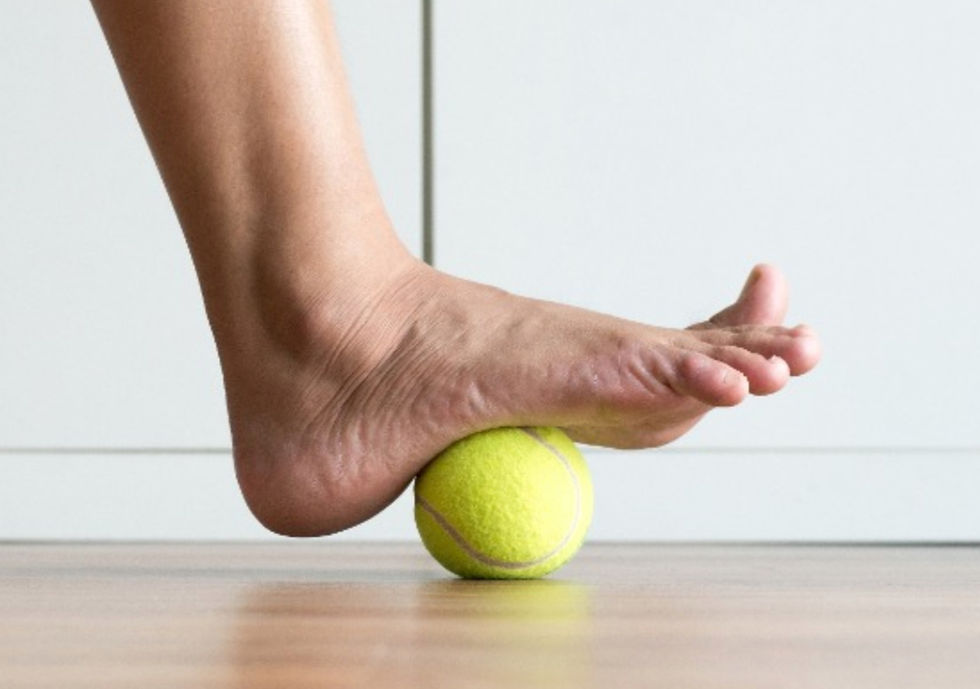
- Stretching the plantar fascia and calf muscles is one of the most effective treatments.
- Important stretches include:
Calf stretches against a wall
Towel stretches before getting out of bed
Plantar fascia stretching with a tennis ball or a foam roller
- Regular stretching improves flexibility and reduces constant stress on the affected tissue.
3. Cold & Heat Therapy
- Applying ice to the heel for 10 minutes 3-4 times a day can help reduce pain and inflammation.
Rolling the foot over a frozen water bottle is a simple and effective home remedy.
- In chronic cases, dipping the foot in a bucket of warm water containing epsom salt gives significant relief.
4. Appropriate Footwear
- Comfortable footwear plays a vital role in recovery. Footwear should provide:
Good arch support
Adequate cushioning (soft sole)
Stable heel support
Walking barefoot on hard surfaces should be avoided.
5. Orthotic In-soles

In chronic, persistent and recurrent cases, customised orthotic shoe inserts can help distribute pressure more evenly across the foot and reduce strain on the plantar fascia.
These can be procured from a podiatrist after getting a foot scan done.
6. Physiotherapy
A structured physiotherapy program should focus on:
Stretching exercises
Strengthening foot and ankle muscles
Gait correction
Modalities such as ultrasound to reduce inflammation
7. Medications
Short course of anti-inflammatory medications (NSAIDs) may help relieve the pain and swelling during the acute phase. However, medications should be used strictly under medical supervision.
Vitamin D supplements help in quick recovery.
Blood sugar and uric acid levels should be checked and treated appropriately.
8. Injections
For patients with persistent symptoms despite supervised conservative treatment, injections are considered as the last resort.
A) Corticosteroid Injections:
These provide short-term pain relief but should be used cautiously due to the risk of plantar fascia weakening or rupture. They also carry a risk of increase in sugar levels and infection in diabetic patients.
B) Platelet-Rich Plasma (PRP):
PRP uses the patient's own blood-derived growth factors to promote healing and are beneficial in chronic cases. They are considered safer than steroid injections.
Is there a role for a surgery?
Almost nil. Less than 1% of patients require a surgical intervention.
Surgery may be considered when:
Symptoms persist for more than 9 to 12 months
All conservative treatments have failed
Daily activities remain significantly limited
The procedure involves partial release of the plantar fascia to reduce tension. Most patients achieve good outcomes, although recovery may take several months.
How to prevent it?
Preventing plantar fasciitis is easier than treating it. Consider the following measures:
Maintain a healthy body weight
Wear supportive & comfortable footwear
Replace worn-out athletic shoes regularly
Stretch calf muscles and plantar fascia daily
Increase exercise intensity gradually
Avoid prolonged standing whenever possible
Strengthen foot and ankle muscles
Early attention to mild heel discomfort can prevent progression to a chronic condition.
What did we just learn?
Plantar fasciitis is one of the most common causes of heel pain.
Majority of patients recover successfully with non-surgical treatment.
Early diagnosis, proper footwear, stretching exercises and activity modification remain the cornerstones of management.
With timely intervention, most patients can recover completely and return to an active and pain-free lifestyle.
If you are suffering from heel pain, consult Dr.Ajinkya Achalare at ArthroSports Speciality Orthopaedic Clinic, Shivaji Park, Dadar, Mumbai for an expert diagnosis, treatment and a complete recovery.


Comments